
Rising for the second straight session, equity benchmark Sensex climbed 142 points on Thursday following buying in IT and finance stocks amid a higher opening in European markets. After a see-saw session, the 30-share BSE Sensex ended 142.43 points or 0.23 per cent higher at 60,806.22. During the day, the index witnessed a high of 60,863.63 and a low of 60,472.81.

The agency had received Rs 946.51 crore to manage its affairs in the Budget Estimates for 2023-24, which was later increased to Rs 968.86 crore in the Revised Estimates.

Retail investors now own a bigger slice of smallcap companies than at the start of 2023-24 (FY24), underscoring their growing conviction about investing in this red-hot space. Data from Capitaline shows mutual funds' (MFs') average holding in the National Stock Exchange Nifty Smallcap 250 rising to 9.26 per cent from 8.67 per cent during the first six months of FY24, with the number of companies with over 20 per cent MF holdings increasing from 24 to 28. In comparison, MF holdings in Nifty50 companies have gone up only marginally, from 9.67 per cent to 9.75 per cent.

Equity benchmarks ended with gains on Tuesday amid a largely firm trend in global markets after facing bouts of volatility during the session. The 30-share BSE Sensex climbed 126.41 points or 0.21 per cent to settle at 61,294.20. During the day, it hit a high of 61,343.96 and a low of 61,004.04.

From the Sensex firms, Tech Mahindra, NTPC, Tata Steel, Maruti, Infosys, Power Grid, Larsen & Toubro, Axis Bank, Titan, Reliance Industries, Wipro and Mahindra & Mahindra were the biggest gainers. Sun Pharma, UltraTech Cement, Tata Motors, Kotak Mahindra Bank, Bajaj Finance, State Bank of India and Nestle were among the laggards.
Equity benchmarks Sensex and Nifty closed with gains on Tuesday, following a firm trend in the global markets. Extending its previous day's rally, the 30-share BSE Sensex jumped 361.01 points or 0.60 per cent to settle at 60,927.43. During the day, it rallied 420.26 points or 0.69 per cent to 60,986.68.
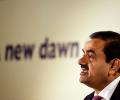
Adani Power, part of the Adani group, plans to add close to 6 gigawatts (Gw) of new power assets in the next five years, according to an investor presentation by the company. That is clearly meant to ride on India's burgeoning power demand. But there is another side to it: All of this new capacity is expected to be thermal power, or power produced from coal.
From the Sensex pack, Mahindra & Mahindra, Power Grid, Bharti Airtel, Bajaj Finserv, HDFC, Hindustan Unilever, Maruti, ITC, Titan, Nestle, Bajaj Finance and Reliance Industries were the major winners.

Ahead of the upcoming elections, political parties have started announcing incentives to benefit women, but what do women truly seek for genuine gender parity, asks Nivedita Mookerji.

The Adani group will have understood the fragility of investor trust in the group. The group needs to improve transparency including in areas like share-ownership (which they have long and mistakenly believed can be side-stepped) and related-party transactions, among others, Amit Tandon and Hetal Dalal point out.

India has also taken note of reports of Saeed's son Talha contesting elections in Pakistan and said the "mainstreaming" of radical terror outfits in the neighbouring country is nothing new and that it has been part of its State policy for a long time.

From the Sensex pack, Titan, Bajaj Finserv, Bajaj Finance, HDFC Bank, HDFC, State Bank of India, Mahindra & Mahindra and IndusInd Bank were among the major winners. HCL Technologies, Wipro and Tech Mahindra were among the laggards.

For the startup ecosystem in India, the scorecard so far has been a mixed bag, observes Akhil Gupta.

As India's stock rises, the resolution of the border row may become even more difficult, warn Harsh V Pant and Kalpit Mankikar.

Stocks of public sector undertakings (PSUs) have been on fire in the past year as investors cheered an improvement in key operating metrics and embraced counters of these state-owned enterprises, analysts suggest. The S&P BSE PSU Index has gained over 90 per cent in the past year, rising much higher than the S&P BSE Sensex, which has rose nearly 19 per cent during this period, according to ACE Equity data. The BSE PSU Index, reports show, has delivered a compound annual growth rate (CAGR) of 28 per cent (including dividends reinvestments) over five years and risen by almost 60 per cent in the past year.

Equity benchmarks ended higher on Wednesday amid buying in banking counters and a firm trend in global markets. Continuing its previous day rally, the 30-share BSE Sensex climbed 91.62 points or 0.15 per cent to settle at 61,510.58. During the day, it jumped 361.94 points or 0.58 per cent to 61,780.90. The broader NSE Nifty gained 23.05 points or 0.13 per cent to end at 18,267.25.

A prominent Indian Diaspora body, FIIDS, on Monday urged Finance Minister Nirmala Sitharaman to allow non-resident Indians and overseas citizens of India (OCI) card holders to invest in the Indian stock market. Such a move would boost the Indian economy further by attracting investment from the global Indian community, said the Foundation for India and Indian Diaspora Studies (FIIDS) USA. FIIDS is a US-based institute for US-India policy studies and awareness.

Market benchmarks fell for third day running on Monday and ended nearly 1 per cent lower amid weak trend in global equities. The 30-share BSE Sensex declined 518.64 points or 0.84 per cent to settle at 61,144.84. During the day, it tumbled 604.15 points or 0.97 per cent to 61,059.33.

While most universities and colleges are genuine about what they offer, applicants need to verify the claims to check for authenticity and red flags if any, alerts Piyush Kumar, regional director, (South Asia), IDP Education, an overseas education consultancy.

Even as the slowdown in the information technology (IT) services sector deepens, banking, financial services and insurance (BFSI), as well as oil and gas companies, emerge as the primary drivers of corporate earnings in the country. The IT services sector's share in corporate earnings declined to a five-year low of 17.4 per cent in the second quarter (Q2) of 2023-24 (FY24), whereas banks and finance companies accounted for 46.5 per cent, and oil and gas firms contributed 16.8 per cent. At their peak, IT services firms like Tata Consultancy Services (TCS), Infosys, HCLTech, and Wipro represented just over a third of the combined net profit of all listed companies in the Business Standard sample.

Tata Group-owned Air India has informed the Centre that aircraft lessors wish to set up their special purpose vehicles (SPVs) outside India since they aren't enthused about the Indian 'legal structure' and are loath to take risks. Indian airlines have a combined fleet of about 700 planes; over 85 per cent are on lease. A majority of lessors are based in Ireland due to its attractive tax policy, light-touch regulations, and swift legal system.

Gold prices hit record high in the third week of March as fears of bank collapses and high inflation led investors to the traditional safe haven. Gold prices are often inversely correlated to dollar strength because the international price is dollar-denominated. The Federal Reserve's (Fed's) stance indicates that the dollar may appreciate further since it is prepared to keep pushing up policy rates. But demand for gold is also up - the World Gold Council claims central banks are buying in addition to private demand.
Notwithstanding concerns about lofty valuations, smallcaps recorded their most significant monthly gain in nearly three years in November. The National Stock Exchange Nifty Smallcap 100 finished the month with a 12 per cent gain, the most since February 2021 when it rose by 12.2 per cent. After declining by 4.1 per cent in the preceding month, the Nifty Midcap 100 rose by 10.4 per cent, the most since July 2022.

Bajaj Finance led the Sensex gainers' chart, spurting up to 2.38 per cent, followed by Bajaj Finserve rising 2.11 per cent and IndusInd Bank closing 1.66 per cent higher. Bharti Airtel, SBI and L&T increased by 1.60 per cent, 1.28 per cent and 0.92 per cent, respectively.

'To the believers of crypto regulations, I have only one question to ask, how will you regulate it?'

From the Sensex pack, Hindustan Unilever, Asian Paints, Bajaj Finance, Nestle, Bajaj Finserv, Reliance Industries, Larsen & Toubro, Maruti, Infosys and Bharti Airtel were the major laggards.

Equity benchmarks recovered most of their intra-day losses and ended marginally lower on Tuesday amid buying in index majors Reliance Industries and Tata Consultancy Services. Helped by last minute buying activity in some of the index heavyweights, the 30-share BSE benchmark Sensex managed to trim most of its early declines and ended lower by 103.90 points or 0.17 per cent at 61,702.29. During the day, it had tumbled 703.51 points or 1.13 per cent to 61,102.68.

Equity benchmark indices ended the trade in the positive territory on Wednesday, with the BSE Sensex closing at its fresh life-time high of 61,980.72, helped by buying in banking counters. After facing highs and lows during the day, the 30-share BSE Sensex finally ended 107.73 points or 0.17 per cent higher at 61,980.72. During the day, the index hit its 52-week high of 62,052.57, higher by 179.58 points.

Muraleedharan said that terrorist groups such as Al-Shabaab have put in place elaborate revenue collection networks, to support their terrorist activities.

Go First chief executive officer Kaushik Khona and tribunal-appointed interim resolution professional Abhilash Lal on Thursday reached out to the airline's staff, seeking their support for revival. While Khona said the company had taken all steps for the airline's revival, Lal put forward the view it would have to raise funds. Employee engagement took place a day after the National Company Law Tribunal (NCLT) admitted the airline's insolvency plea on Wednesday and ordered a moratorium on recoveries.

A visit to the National Science Foundation in Alexandria, Virginia is likely to be the first public engagement of the prime minister, which would be hosted by the First Lady, the White House said on Tuesday.
SBI Q3FY24 result review: A higher-than-factored weakness in the October-to-December quarter (Q3) results of State Bank of India (SBI), for financial year 2023-24 (FY24), has prompted brokerages to cut earnings estimates for the ongoing financial year. They, however, have maintained 'Buy' ratings on the stock, revising target price upwards in some cases, owing to the stock's recent underperformance relative to its peers.

Identifying India as one of the five fragile economies of the world, Chief Economist at the Institute for International Finance, has predicted an uncertain outlook for its future in view of the next year's general elections.
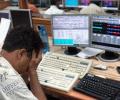
SBI was the biggest loser in the Sensex pack, tumbling 2.83 per cent, followed by Infosys, TCS, Bajaj Finance, Tech Mahindra, Wipro and Axis Bank. In contrast, Titan, L&T, NTPC, Power Grid, Sun Pharma, ITC and HDFC twins were among the prominent winners, rising as much as 1.97 per cent.

The World Bank has approved loans totalling $1.75 billion (about Rs 13,834.54 crore) to fund India's PM Ayushman Bharat scheme and private investment to boost the economic growth. Of the total loan, $1 billion will go towards the health sector, while the rest $750 million will be in the form of development policy loan (DPL) to fill the financing gaps through private sector investment in the economy. The World Bank Board of Executive Directors approved two complementary loans of $500 million each to support and enhance India's health sector.

'I don't think we have ever seen such alignment of everything that we need in the banking sector.'

Outflow of portfolio investment, and consequential decline in the stock market and the value of the rupee are effects of the problems in Eurozone.

Benchmark indices bounced back on Monday after a three-day fall, largely helped by buying in banking counters. After a weak beginning, the 30-share BSE Sensex recovered the lost ground and ended 300.44 points or 0.51 per cent higher at 59,141.23. During the day, it climbed 436.76 points or 0.74 per cent to 59,277.55. The NSE Nifty went higher by 91.40 points or 0.52 per cent to close at 17,622.25.

They all seem to forget that the Music Academy is as much an independent institution as T M Krishna is an individual musician. In drawing those red lines for the Academy management, they do not even seem to recognise that they too have crossed a red line themselves, points out N Sathiya Moorthy.

Duvvuri Subbarao recounts how his tensions with P Chidambaram and Pranab Mukherjee, then finance ministers, over monetary policy spilled over into other issues in the central bank in this excerpt from Who Moved My Interest Rate?, his memoir of his term as Reserve Bank of India governor.
